
Colloquium in Atlantic History


Spring 2013

HIST 7011

Colloquium in Atlantic History

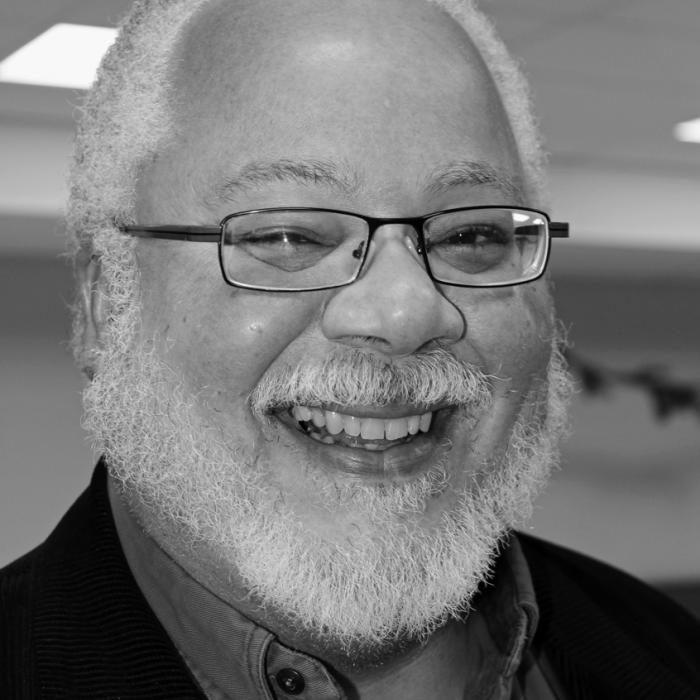
Joseph C. Miller

HIST 7011 is a graduate history colloquium for students wishing to contextualize their primary (usually regional) examination fields, or advanced research, in the integrated developments proceeding all around the Atlantic Ocean basin from the fifteenth through the nineteenth centuries.  It draws on the trans-regional perspectives now prominent throughout the historical discipline, as contemporary “globalization” has prompted historians to recognize the artificiality (or, as the course will argue, merely the historicity) of the isolated “national” units that otherwise form the core of the modern field.  The colloquium is intended primarily for students specializing in the histories of North America, the Caribbean/Central/Southern Americas, Europe, or Africa, or for students working on Asia who are interested in the epistemological challenges of thinking outside the “boxes” within which they (appropriately) concentrate their research.  No experience with “world” or “Atlantic” or “global” or “big” history is presumed.

The intellectual challenge of HIST 7011 is to maintain a resolutely historical – empirically based, humanistic, particularistic, and processual – perspective on transcending scales that slide off far too easily into quasi-social-science abstractions.  It will focus on the sequence of encounters among people from vastly different regional backgrounds as they together – eventually unequally – engaged one another to create the first phases of the “modern” world, for better or for worse, by sometime in the early nineteenth century.  The principal units of analysis will be the particularity of the “Atlantic” context, the various strategies that such encounters provoked, the dialectical and incremental processes by which people generated change, the growing irrelevance of the means they brought to these challenges, and the eventual largely unintended and unanticipated outcomes.

On the premise that graduate students learn best by doing, members of the colloquium assume primary responsibility for presenting their own assessments of selected readings and their own research.  They thus review the basic (or emergent) historiographical framework of the discipline during the first third of the semester, lead discussions of assigned readings during the middle third of the term, and develop a substantial essay for presentation and discussion during the final third of the course.  The objective of the essay is to apply the epistemology of the course to research materials that they select;  the instructor reads the finished essay at the end of the term.

The collective readings considered during the middle portion of the colloquium have been selected to represent recent and significant thematic and methodological developments in the fast-growing field of Atlantic history, emphasizing works available in paper editions to accommodate student budgets.

Members of the colloquium thus have the opportunity to emerge in May with an overview of the sources, methods, and historiography of the field, familiarity with selected recent, significant works, considered knowledge in areas in which they have led discussion, up-to-date annotated bibliographies in other fields that their classmates have presented, and an expanded perspective on their own research or examination-field preparation.  The colloquium thus supports students’ larger academic strategies as well as exposing them to a teaching field that is in high demand in departments rebuilding toward the future proportions of the historical discipline.


Corcoran Department of History
University of Virginia
Nau Hall - South Lawn
Charlottesville, VA 22904


Contact:
tel: (434) 924-7147; fax: (434) 924-7891
office: M-F 8 am to 4:30 pm
contact page